From Site Visit to Power Generation: How Our Solar Installation Process Works
7-8 min read

Installing a solar power system is a big decision for any business, industry, landowner, institution, or commercial property owner. It is not just about putting panels on a roof or land. A successful solar project needs proper planning, site understanding, technical design, quality material selection, professional installation, and long-term support.
At JNJ Energies, we follow a clear and structured process to make the entire solar journey simple, transparent, and reliable for our clients.
From the first conversation to final power generation, every step is carefully planned so your solar project is built for long-term performance.
Step 1: You Contact Us With Your Project Details
The process begins when you reach out to us with your solar requirement.
You may be planning a rooftop solar system for your factory, office, home, school, hospital, warehouse, or commercial building. Or you may have open land and want to develop a ground-mounted solar power plant.
At this stage, we collect basic details such as:
Project location
Type of property
Available rooftop or land area
Current electricity consumption
Expected solar capacity
Business or personal energy goals
Budget expectations
Timeline for execution
This first step helps us understand what kind of solar solution may be suitable for you.
Step 2: We Understand Your Requirement in Depth
After receiving your basic details, our team studies your requirement more carefully.
Every client has a different goal. Some want to reduce monthly electricity bills. Some want to use unused land productively. Some want a large-scale solar power plant. Others may need consulting, design, or Operations and Maintenance support.
At JNJ Energies, we do not believe in giving a standard solution to every client. We first understand your property, power requirement, usage pattern, investment plan, and long-term objective.
This helps us suggest a solution that is practical, efficient, and suitable for your site.
Step 3: We Schedule a Video Call or In-Person Meeting
Once we understand the basic requirement, we arrange a detailed discussion with you.
This can be done through a video call or an in-person meeting, depending on your convenience and project location.
In this meeting, we discuss:
Your energy requirement
Rooftop or land availability
Project size possibilities
Type of solar system suitable for you
Expected savings or generation
Approximate investment range
Execution timeline
Technical and commercial expectations
This discussion gives both sides clarity before moving to the next stage.
It also helps you ask questions and understand how the project will move forward.
Step 4: Joint Site Visit Is Planned
After the initial discussion, we plan a joint visit to your site.
This is one of the most important steps in the solar installation process. A solar project cannot be planned properly without studying the actual location.
During the site visit, our team checks the physical condition of the site and understands the practical requirements for installation.
For a rooftop solar project, we study:
Roof size and usable area
Roof strength and structure
Shadow from nearby buildings, trees, tanks, or other objects
Panel placement possibilities
Cable routing
Access for installation and maintenance
Safety conditions
For a ground-mounted solar power plant, we study:
Land size and shape
Land leveling requirement
Shadow-free area
Road access
Soil and ground condition
Nearby electrical infrastructure
Distance from grid connection point or substation
Space for inverters, transformers, and internal movement
A proper site visit helps avoid future problems and makes the design more accurate.
Step 5: Our Surveyor Prepares the Layout
After studying the site, our surveyor prepares the technical layout.
This layout shows how the solar system can be installed on your rooftop or land. It includes the approximate placement of panels, structure planning, cable routes, inverter locations, and other key technical details.
The layout is important because it directly affects:
Power generation
Space utilization
Maintenance access
Safety
System efficiency
Future expansion possibility
A good layout makes the solar system easier to install, operate, clean, and maintain.
At JNJ Energies, we focus on designing the system in a way that gives strong long-term performance, not just quick installation.
Step 6: Senior Team Reviews Pricing and Project Scope
While the survey and layout work is being studied, our senior leadership team reviews the project commercially.
For larger projects, pricing is often discussed based on project size and per MW requirement. The final commercial proposal depends on several factors, including capacity, site condition, material quality, project scope, structure requirement, and electrical work involved.
At this stage, we work on:
Project capacity
BOQ
Material specifications
Scope of work
Estimated cost
Timeline
Commercial terms
Execution plan
Our goal is to keep the discussion transparent and practical so the client clearly understands what is included in the project.
Step 7: BOQ and Quality Standards Are Discussed
BOQ means Bill of Quantities. It is a detailed list of the major materials and components used in the solar project.
A solar project’s performance depends heavily on the quality of its BOQ.
A typical BOQ may include:
Solar panels
Inverters
Mounting structures
DC cables
AC cables
Junction boxes
Earthing material
Protection equipment
Monitoring system
Transformers, if required
Civil and structural work
At JNJ Energies, this stage is very important because we believe a solar plant should be built like a long-term asset.
We are not just an EPC company. We also own and operate our own solar plants with long-term Power Purchase Agreements under various government schemes. Because of this experience, we understand how important quality is after the installation is completed.
We use the same quality mindset for client projects that we use for our own plants.
Step 8: Site Visit to Our Own Solar Plants
One of the biggest differences at JNJ Energies is transparency.
Before you give us your purchase order, we can arrange a visit to our own solar sites. This gives you the opportunity to see our work in real life.
You can observe:
Installation quality
Material selection
Plant layout
Structure quality
Electrical setup
Maintenance approach
Long-term performance standards
This gives clients more confidence before moving forward.
We do not want you to trust only presentations, brochures, or promises. We want you to see the quality we believe in.

Step 9: Final Proposal and Mutual Agreement
After the site study, layout, BOQ, pricing, and scope are discussed, we move toward final proposal approval.
At this stage, both sides review the project details carefully.
This includes:
Final system capacity
Technical specifications
Project cost
Payment terms
Installation timeline
Scope of responsibilities
Warranty and service details
Operations and Maintenance requirements
Once the design, pricing, and terms are mutually agreed upon, the project moves forward to contract signing.
A clear agreement helps avoid confusion and ensures smooth execution.
Step 10: Contract Signing and Project Planning
After the contract is signed, the project officially moves into execution planning.
This includes preparing the project schedule, arranging materials, planning manpower, coordinating site activities, and setting internal timelines.
A proper execution plan helps the project move smoothly from procurement to installation.
For commercial and industrial projects, coordination is especially important because solar installation may need to happen alongside regular business operations.
At JNJ Energies, we plan the execution in a way that minimizes disruption and keeps the project organized.
Step 11: Material Procurement and Site Preparation
Once the project plan is ready, procurement begins.
This means sourcing the required materials such as solar modules, inverters, mounting structures, cables, electrical components, and safety equipment.
At the same time, site preparation work may begin.
For rooftop solar, this may include checking access points, marking panel areas, and preparing the roof for installation.
For ground-mounted projects, this may include site cleaning, leveling, marking, civil work, foundation preparation, and boundary planning.
Quality procurement and proper site preparation are essential for long-term plant performance.
Step 12: Installation Work Begins
After materials are ready and the site is prepared, the installation work begins.
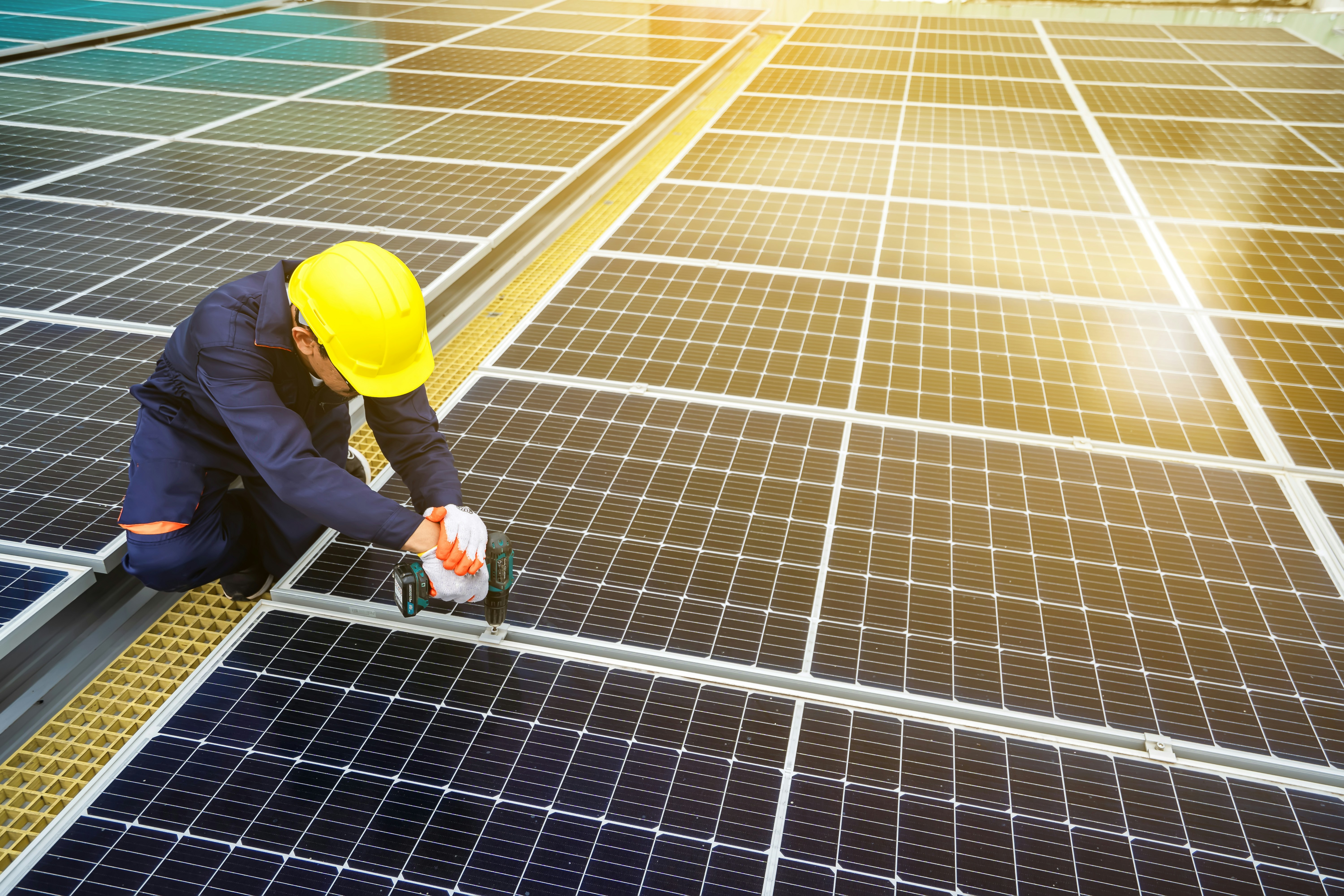
For rooftop solar systems, the team installs the mounting structure, places the panels, lays cables, connects inverters, and completes the electrical work.
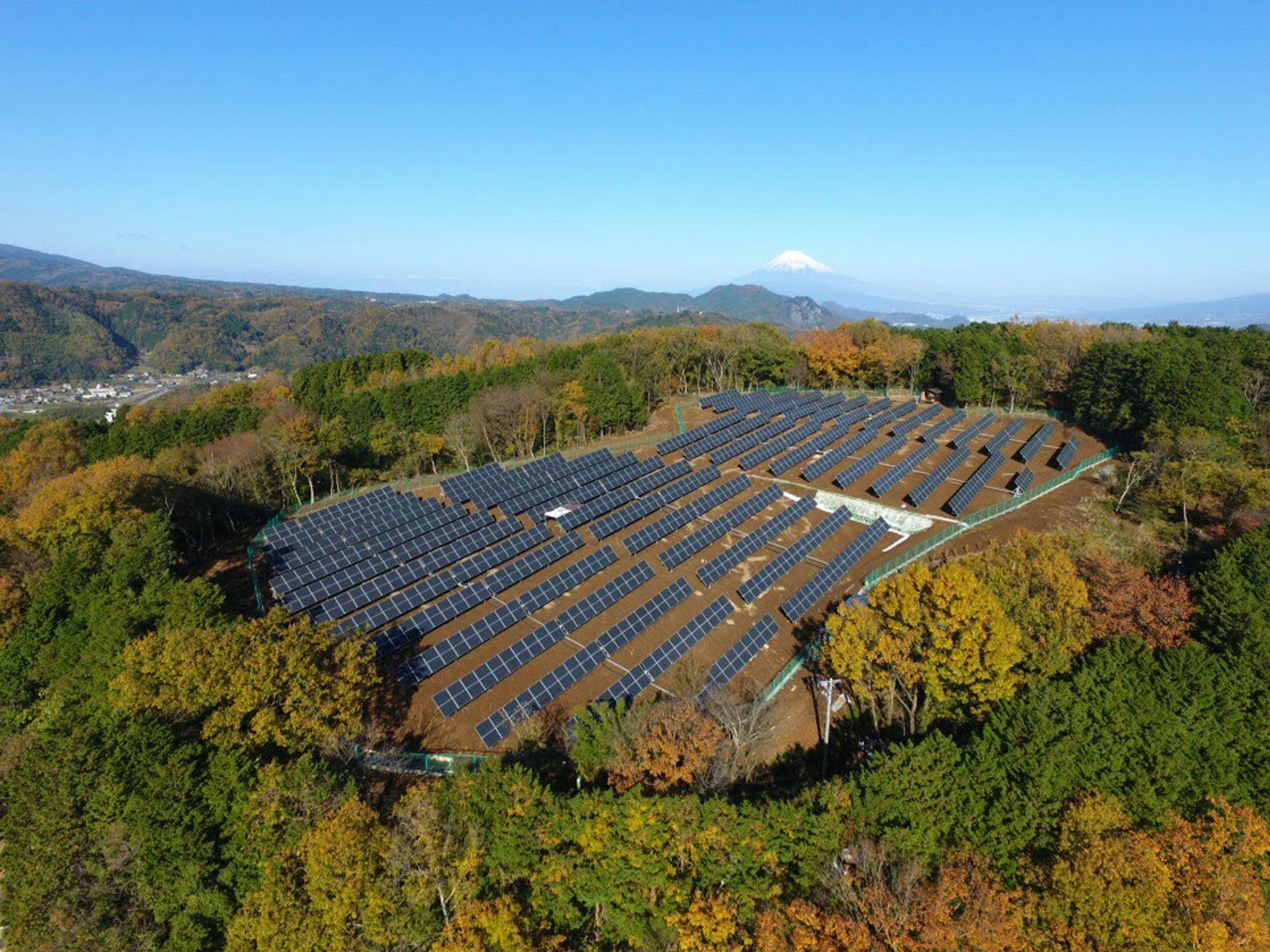
For ground-mounted solar plants, the process may include foundation work, structure installation, module mounting, cable trenching, inverter setup, transformer installation, earthing, and protection systems.
During installation, we focus on:
Correct panel placement
Strong structure fixing
Safe cable routing
Proper earthing
Electrical safety
Clean execution
Long-term maintenance access
Good installation quality is essential because even the best components cannot perform well if the execution is poor.
Step 13: Testing and Commissioning
Before the system starts regular power generation, testing and commissioning are carried out.
This step ensures that the solar system is safe, properly connected, and ready to operate.
Testing may include:
Electrical connection checks
Inverter testing
String testing
Earthing verification
Safety checks
Monitoring system setup
Trial generation check
Once all checks are completed, the system is commissioned.
Commissioning is the stage where your solar project becomes operational.
Step 14: Power Generation Begins
After commissioning, your solar system starts generating electricity.
For rooftop solar projects, the generated power can help reduce your electricity bills and support your daily energy consumption.
For ground-mounted solar power plants, the generated power can be used according to the project structure, whether for captive use, grid supply, or other approved arrangements.
This is the moment where your investment begins delivering value.
Your rooftop, land, or property is now producing clean energy.
Step 15: Operations and Maintenance Support
A solar plant must be maintained properly to perform efficiently year after year.
JNJ Energies provides Operations and Maintenance services to help keep your system running at peak efficiency.
Our O&M support includes:
Regular inspections
Cleaning planning
Performance tracking
Preventive maintenance
Fault detection
Quick issue resolution
Equipment health checks
Generation monitoring
Good maintenance helps improve plant uptime, protect equipment life, and maximize return on investment.
Final Thoughts
A successful solar project is not built in one step. It is the result of a clear process, proper site study, accurate design, quality materials, professional installation, and long-term maintenance.
At JNJ Energies, we guide clients through every stage — from first discussion and site visit to layout design, BOQ finalization, contract signing, installation, commissioning, and power generation.
Because we own and operate our own solar plants, we understand what matters in the long run. That is why we build client projects with the same care, quality, and responsibility that we use for our own solar assets.
JNJ Energies — from site visit to power generation, building solar solutions designed for long-term performance.